Back to the Survival Encyclopedia
By Josh Forcier
Trip plans, survival kits, and vehicle readiness
Build overlapping plans for communication, navigation, weather, equipment, and a delayed return.
General field reference, not medical advice. Use it to support immediate decisions, then follow 911, rescue coordinators, medical professionals, current warnings, and local agency guidance.
Build a trip plan someone will use
A useful trip plan is specific enough that a responsible person knows when and where to begin raising concern. Give them:
• names, contact information, medical concerns, and vehicle description;
• trailheads, camps, intended routes, alternates, and expected hunting areas;
• start time, planned return, and the time they should take action;
• satellite messenger or radio details;
• agency, outfitter, lodging, and local emergency contacts;
• instructions not to wait indefinitely when the agreed check-in is missed.
Update the contact when the route changes. A detailed plan left with someone who does not know when to act is incomplete.
Carry systems, not a pile of gadgets
The National Park Service Ten Essentials are a practical starting structure: navigation, sun protection, insulation, illumination, first aid, fire, repair tools, food, hydration, and emergency shelter. Adapt each system to the trip.
Redundancy should cover important failure modes. A phone and a battery bank are not two navigation systems if both depend on the same damaged screen. A filter and purification tablets address water differently. A headlamp plus spare batteries is more useful than several untested lights.
Before leaving:
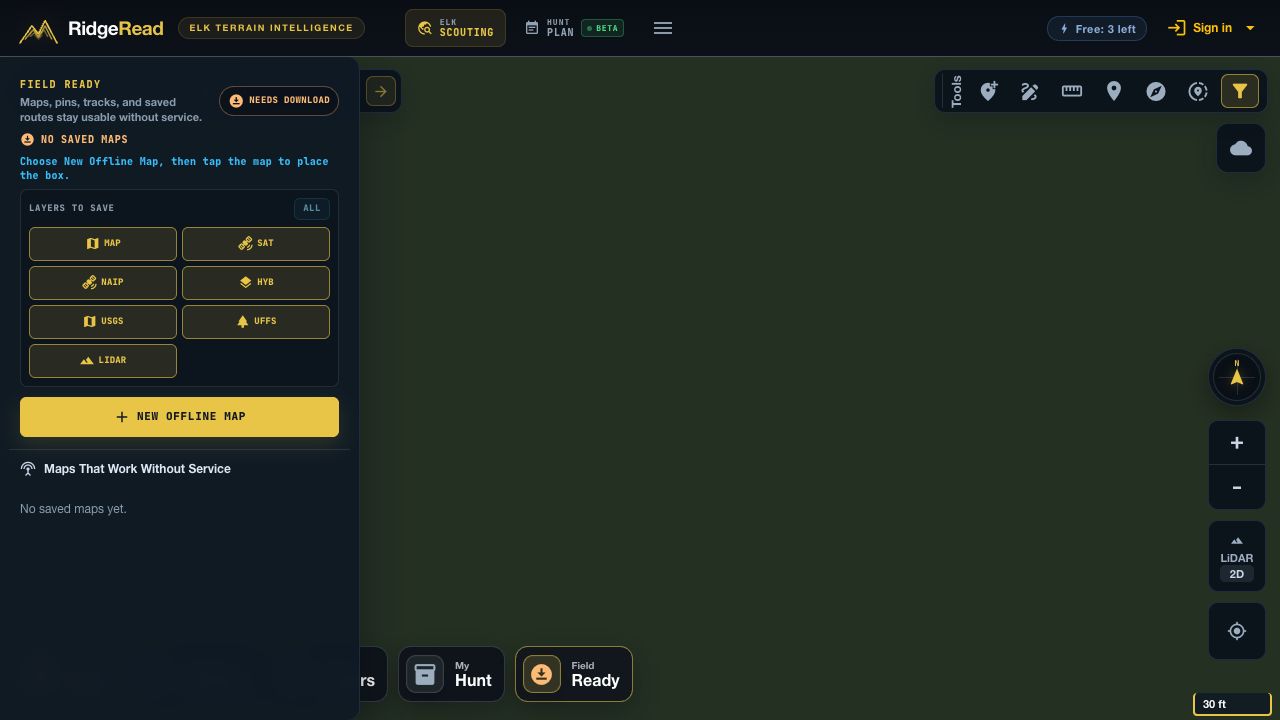
1. Download maps for the full approach, hunt area, alternates, and exit.
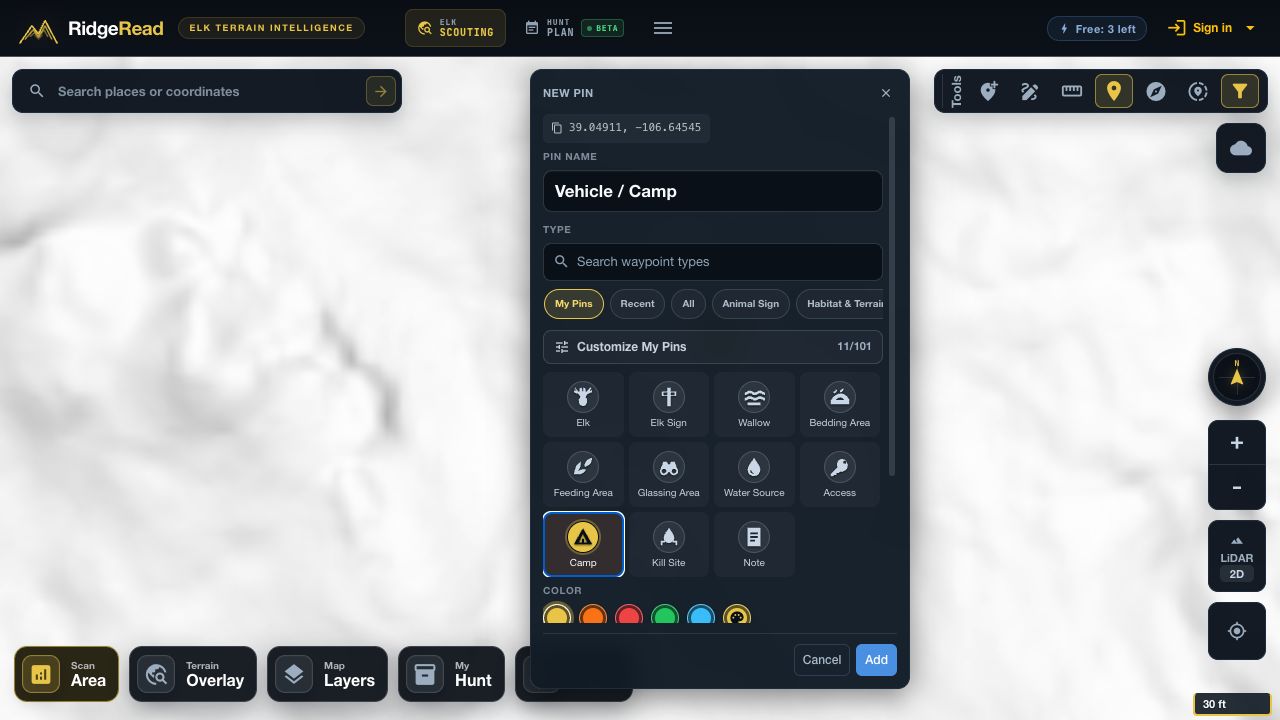
2. Save the vehicle, camp, trailheads, water hypotheses, and communication points.
3. Test the satellite device outside with a clear view of the sky.
4. Carry a paper map and compass and know how to use them.
5. Protect electronics from water and cold.
6. Carry an emergency shelter even on a day trip.
7. Bring insulation for the coldest credible delay, not only the planned activity.
8. Carry first-aid and bleeding-control equipment you know how to use.
Prepare the vehicle as part of the survival plan
Remote trailheads can turn a small mechanical problem into an exposure event. Check tires, spare tire pressure, jack, fuel range, fluids, battery, lights, and the condition of the road before committing.
Useful vehicle equipment may include:
• shovel, traction aids, and recovery equipment matched to the vehicle;
• warm layers, blankets, food, and water reserved for delays;
• headlamp, reflective marker, basic tools, and tire repair equipment;
• charging cable and battery power;
• paper road map and current closure information.
Know the limits of self-recovery. Improper straps, attachment points, jacking, or winching can cause severe injury. Turn around before a road exceeds the vehicle, weather, or driver.
Make an offline check before departure
Place the device in airplane mode at home or the trailhead. Open every map area, route, waypoint group, and reference you expect to use. Confirm that the phone can show the content and that the device’s location still updates.
Offline preparation is complete only when it has been tested offline.